Un poeta, si no me engaño / pariente y amigo mío, / me regaló por mi daño / unos versitos «al río».
(A poet, if I'm not mistaken, / a relative and friend of mine, / gave me, to my misfortune, / a few little verses "to the river".)
These lines open "Poesía y prosa" (Poetry and Prose), a poem by Josefa Murillo, a 19th-century Mexican poet. In it, she tells how a relative sent her a poem about the Papaloapan, the river that runs through her town. In the first quatrains, she describes what this relative promised she would find: a river like a "luenga cinta de plata" (a long silver ribbon), clear water reflecting the sky, a butterfly, a white lily on the bank, foam, the mist at dawn.
So she climbs into a bongo, a local rowboat, to go and see for herself. No silver ribbon: murky water. No butterfly: clouds of mosquitoes. Instead of the lily, she spots "una cosa algo abofada / que se calla por sabida", a bloated thing better left unnamed. To smell it, she adds, you would need the nose of the town council. Then come twenty vultures tearing apart a calf, and a dead lizard bumping against the hull.
She goes home to write "la broma", the joke. The last stanza is addressed to her relative: next time, may he sing "en estilo prudente / ¡y no me entusiasme tanto!" (in a cautious style, and not get me so carried away!)
The poem is called "Poesía y prosa". It is signed Totoloche. Hardly anyone knows it, because Josefa Murillo is remembered for something else entirely: her tears.
The Lark of the Papaloapan
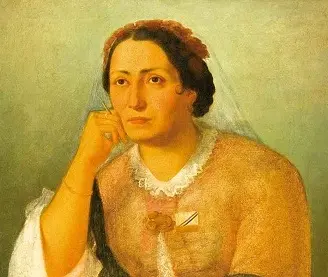
Josefa Murillo Carlín was born on February 20, 1860, in Tlacotalpan, a small river port in the south of the state of Veracruz, Mexico. Her father was a doctor; the family was well off. She suffered from asthma, never received formal schooling, and would practically never leave the family home.
Even so, she began publishing in the regional press at a young age, and in 1894 three of her poems appeared in El Renacimiento, a literary magazine in Mexico City.
Her fiancé, Lorenzo de la Puente, died of yellow fever; she never married. It is also said that as a teenager she wrote to President Juárez asking him to make her father let her go out, and that the letter was intercepted. No one has ever found that letter.
She died on September 1, 1898, at 38, in the house where she was born. By then she was already called "la Alondra del Papaloapan", the lark of the river.
How to Make a Sad Poet
If you have ever heard Josefa Murillo, it was most likely through "Definición" (Definition). In turn, the rose, the water, the wind and the light each give their definition of love: a fragrance, a murmur, a sigh, a flame. Then comes the punchline:
¡Oh cuánto habéis mentido! / Amor es una lágrima.
(Oh, how you have lied! / Love is a tear.)
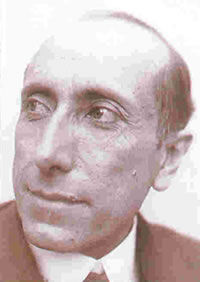
In 1937, the composer Salvador Moreno made it his very first song, and the Catalan soprano Victoria de los Ángeles recorded it. It is the voice of Murillo that has travelled the farthest, and it is a tear.
This image is no accident. When she died, many writers paid tribute to her in the press, in prose and in verse, among them Amado Nervo, Justo Sierra and Luis G. Urbina. These tributes were organized by the writer Cayetano Rodríguez Beltrán. In 1899, he collected them in a book, following a selection of her poems: the first edition of her work, titled Poesías. It paints the portrait of a "joven virtuosa" (virtuous young woman), shut away at home, the only companion of her elderly father. Nervo praises the purity of her "virginal" expressions. Another writer places her alongside Sor Juana, but adds that the two other women poets are "more poets than poetesses", whereas Josefa kept "la delicadeza" (the delicacy) of her sex.
In the 20th century, her biographers extended the portrait. One makes pain the very engine of her writing, almost a need. Another is surprised that she could have written funny poems at all: it seems inconsistent with her personality.
César Cañedo, a researcher at the National Autonomous University of Mexico (UNAM), devoted a master's thesis and then an article (2017) to dismantling this cliché. He insists that no one lied on purpose. A 19th-century woman poet was expected to suffer gracefully, and that is what people chose to see.
The sad strain is real. But even there, the tear sometimes has teeth. In "La ola" (The Wave), the lover had sworn the sea would end before his love did:
las olas mueren y tu amor no existe; / ¡qué mal supiste / comparar tu amor!
(the waves die and your love is gone; / how badly you chose / what to compare your love to!)
Enter Totoloche
Josefa Murillo signed her serious poems with her own name. For the others, she had pen names: Xóchitl, Ráfaga, Matusalem, el Chaquiste and Totoloche (also spelled "Tololoche"). For Cañedo, these are not just masks to hide behind, but characters, each with its own register. Totoloche, according to her biographer, is the local name for a thin, flexible switch used to discipline animals. The program is clear.
Four known poems bear this signature, and the "animals" being disciplined are almost always men. First there is Don Pegote, the guest who settles in at lunchtime and never leaves:
Ha llegado la hora del almuerzo, / sin poderlo evitar, / oye sonar los trinches y los platos / ¡Y no se va!
(Lunchtime has come, / there's no getting around it, / he hears the forks and plates clatter / And he doesn't leave!)
The hours go by, marked by the life of the house: the meal he is offered, the children coming home from school, the dinner he ends up inviting himself to. The refrain falls at every stanza. What the good lady of the house was supposed to keep to herself, her annoyance, Totoloche sings out loud.
In "Indecisión" (Indecision), a young woman, Carlota, rereads three love letters. The poet writes "Yo, sin ti, me moriré" (without you, I will die), the sailor "Yo, sin ti, naufragaré" (without you, I will be shipwrecked), the soldier "¡Yo, sin ti, me mataré!" (without you, I will kill myself!). Three men, three trades, the same blackmail. And Carlota sighs, pretending to be overwhelmed:
¡Y no puede ser / que quiera a los tres! / ¿Qué haré?
(And I can't possibly / love all three! / What shall I do?)
"Desahucio" (No Hope Left) drives the point home. A suitor asks her for a remedy for his ailing heart; she flatly refuses to cure him, advises him to draw up his will, and concludes:
¡Vamos! muera usted en gracia / ¡y le rezaré un sufragio!
(Come now! die in a state of grace, / and I will pray for your soul!)
The fourth poem is the boat trip of "Poesía y prosa". The male poet, with his silver ribbons, gets the switch in turn.
The Right to Laugh
At the time, a woman poet was expected to offer emotion, the contemplation of nature, piety: anything but mockery.
Yet Josefa Murillo makes fun of everyone, not only men. In the "Letrilla Chaquistera", it is the parish's devout ladies who jostle to have their picture taken when the priest announces an album as a gift for the Pope. In "Los acuerdos de la envidia" (The Pacts of Envy), a group of women plot to spy on a rival who is too pretty, at church as on the promenade. Under the name Ráfaga, she even calls on the mayor of Tlacotalpan to stop cockfighting.
One detail turns the whole story around: according to her biographer, these "festive" poems were the ones that circulated most. They were read in the regional newspapers, but also in Mexico City, in Pachuca, as far as Chihuahua. So it was not the readers who set them aside, it was official memory.
Sixty-Four Poems
Most of her papers were lost in a flood in Tlacotalpan. The 1899 tribute collects 28 of her poems, 11 of them previously unpublished; then her work fell into oblivion for more than half a century.
It was not until the 1960s that researchers and publishers from Veracruz gathered her work again, poem by poem. The Universidad Veracruzana edition of 1984 contains 64 poems: to this day, that is all we know of her. Two years later, Salvador Moreno published a selection in Spain. The poet José Emilio Pacheco compared her to Emily Dickinson: another woman who rarely left her home, and whose work was long misread.
The Same River
In another poem, "Vagando en el terruño" (Wandering Through My Homeland), Josefa Murillo describes the Papaloapan at dawn, without a trace of irony:
Amanece. Refleja el ancho río / nubes doradas, juncos y palmeras,
(Dawn breaks. The wide river reflects / golden clouds, reeds and palm trees,)
The herons, the hummingbirds, the water lily opening. It is the relative's river, or nearly. The river of vultures and the dead lizard flows in the same place.
She had seen both.
Sources :
César Cañedo, « Una mirada lejos del deber ser de las mujeres: la poesía de Josefa Murillo », Literatura Mexicana, XXVIII.1, 2017, p. 39-68. https://www.redalyc.org/pdf/3582/358250573003.pdf
Lilia Granillo Vázquez, « Teresa, Josefa y Antonia, escrituras románticas en solterías para la liberación de todas », Signos Literarios, n° 39, 2024, p. 100-153.
Elizabeth Quezada Pizano, « La obra poética olvidada de Josefa Murillo: una propuesta para una edición anotada », Jóvenes en la Ciencia, vol. 20, Universidad de Guanajuato. https://www.jovenesenlaciencia.ugto.mx/index.php/jovenesenlaciencia/article/download/3921/3403
Emmanuel Pool, « Salvador Moreno, una voz solitaria », La Palabra y el Hombre, Universidad Veracruzana. https://lapalabrayelhombre.uv.mx/index.php/palabrahombre/article/download/3998/5576/14018