Strange question, isn't it? Don't worry, it will feel a little less strange once you've read this article :) Let's start at the beginning. While hunting for poems here and there on the internet to feed the platform, I also came across articles, essays, lectures... It was reading an article by Samuel Coleridge, then a lecture by Paul Valéry, that made me want to write about the question: "What makes a text a poem?" There will, of course, be no answer! But it can be interesting to look back a little and follow the evolution of certain theories about writing and the poetic text. After all, now that we write poems with no required form, no imposed rhyme, no expected fixed structure, what still makes a text a poem?
Mixing the useful and the pleasant — Horace
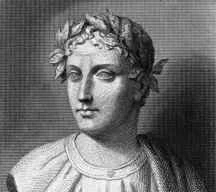
Let's look first at one of the first thinkers to theorize the poetic act: Horace. For this Latin poet of the first century BC, a poem is not a mystical inspiration; it is a crafted object. The poet is not a prophet but an artisan — an engraver, a sculptor of words. You must cut, polish, cross out relentlessly — the famous labor limae, the "work of the file." The poet is the one who files down his material until the form is perfect, in the service of a precise effect on his audience: to move, to instruct, to please. This craftsmanship takes time! Horace advised waiting nine years before publishing a poem. Nine years of reworking, letting it rest, coming back to it. And this slowness presupposes something else: a poet who does not write for a living, and a readership that does not read for distraction. Horace moved among the Roman elite; he wrote for cultivated readers. Odi profanum vulgus, he wrote — I hate the profane crowd. Horatian poetry is not a popular art. Hence his notion of callida junctura: the art of joining words with such care and rarity that an ordinary term suddenly becomes precious. Horatian beauty does not lie in an accumulation of effects — it lies in the millimetre-precise adjustment of words to one another, perceptible only to the trained ear.
The Ars Poetica is, moreover, a letter addressed to the Pisos, young aristocrats in training. The poem is a technology of speech in a world that lacks tools for knowing itself. In those days, poetry still served to understand and structure the world: to hand down myths and practical wisdom, to educate the young patricians.
Hence this formula, which has crossed two millennia:
Poets aim either to instruct or to delight, or to say at once things both pleasing and useful for life. Aut prodesse aut delectare — to be useful, or to please. And ideally: miscuit utile dulci, to mix the useful with the pleasant.
One last point about this Latin author: surprisingly, theoretical and technical perfection is not enough. He lays down this important principle:
If you want me to weep, you must first grieve yourself. (Si vis me flere, dolendum est primum ipsi tibi.)
For him, if the poet has not truly felt, the tool will not work, the statue will remain cold, the listener will feel nothing. Perhaps he saw the poet as a kind of scout for the elite? Someone who passes through emotions and experiences in order to describe them and make them felt by an elite whose duty is to reign and govern. Horace says: do not write about mourning if you have not lived it, nor about war, nor about love, anger, humiliation, despair, joy... the list is long... if you have not lived or felt it, you do not write about it; your text will not be a poem. Work and imagination are not enough if the raw material has not been steeped in the experience described. The question remains open: is a poem an ingenious assembly of words that imitates the true, or the product of flesh that has really burned?
Coleridge and organic form
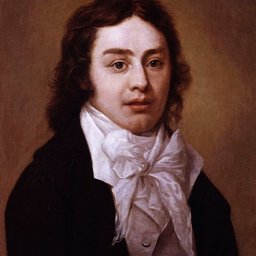
Eighteen centuries later, in 1818, Samuel Taylor Coleridge wrote a definition that completely shifts the ground. The world had changed: poetry was no longer needed to explain natural phenomena, hand down founding myths or educate young patricians. Science, history and philosophy now occupied those territories. Poetry could then become something else.
Poetry is opposed not to prose (a matter of metre) but to science. Science aims at truth; poetry aims at pleasure.
The poem no longer has to serve: its worth lies in the reading experience it gives. The poem frees itself from utility. It no longer has to justify its existence. This shift comes with a second idea. Coleridge opposed the theory that saw the poem as a machine — an assembly of fixed rules (metre, rhymes, figures) into which ideas are inserted. He proposes the opposite image: the poem is a living organism. Form is not a mould imposed from outside; it grows with the idea, like a tree from a seed. Every word, every image, every rhythm is an organ — you cannot remove or replace them without breaking the whole.
From this Coleridge draws a decisive formula:
nothing can permanently please, which does not contain in itself the reason why it is so, and not otherwise.
Nothing can please for long if it does not carry within itself the reason for its form. A poem that could have been phrased otherwise is a poem that was not truly necessary in that form. This intuition — that form and content cannot be separated — Paul Valéry would turn into an operational criterion, as we shall see.
But Coleridge adds yet another requirement:
A poem is that species of composition, which is opposed to works of science, by proposing for its immediate object pleasure, not truth; and from all other species — having this object in common with it — it is discriminated by proposing to itself such delight from the whole, as is compatible with a distinct gratification from each component part.
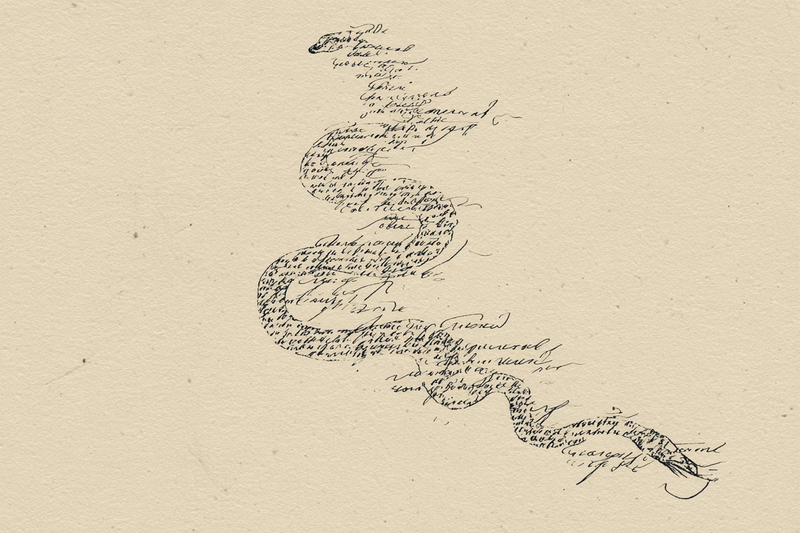
A poem, says Coleridge, must work on two levels at once: each part must hold, and so must the whole. Both, at the same time. A novel, for instance, can (unfortunately) have paragraphs and sometimes whole chapters that are... rather limp (let's say not very interesting at the level of the writing) — but it hardly matters, because we read for the plot, for the characters. Not so the poem. A poem fails if it holds in its overall movement but not in its individual lines; or the reverse, if it strings together fine finds without forming a whole. The successful poem holds at both levels at once. Coleridge gives a rather striking image of this: reading a poem is like the motion of the serpent, "at every step he pauses and half recedes, and from the retrogressive movement collects the force which again carries him onward." We do not move through a poem as through a novel — we stop, we go back, we reread, and it is this very movement that makes it hold.
Milton's three words
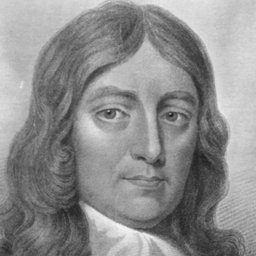
In the same book, Coleridge also makes a remark that left its mark on poetic theory. He has just spent several pages developing his own definition of the poem when he stops to point out that John Milton, in a treatise on education published in 1644, had said the same thing in three words slipped into a parenthesis about poetry: simple, sensuous, passionate.
Simple: a poem does not have to be learned to be profound. It offers a path already traced, not a labyrinth the reader would have to clear.
Sensuous: the poem works through concrete images — things seen, heard, touched. Without that, it flattens into didacticism or dissolves into abstraction.
Passionate: the true passion of humanity must run through both the thought and the image — a direct echo of Horace's si vis me flere. Three simple requirements to remember!
The test of form — Valéry
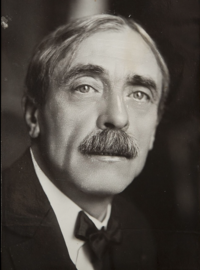
A century after Coleridge, Paul Valéry offers an image that is probably more telling than any theory for knowing whether a text is a poem. Valéry takes up a comparison from François de Malherbe (a French poet of the seventeenth century and founding figure of classical doctrine):
Prose is to walking what poetry is to dancing.
Walking has a goal — getting somewhere. Once you have arrived, you forget how you walked. Dance has no destination: it is its own end. Once understood, prose disappears, absorbed by its meaning. The poem, however, "does not die for having served; it is expressly made to be born again from its ashes." So, next time you are writing or reading a poem, ask yourself this question: did you feel you were dancing, or walking earnestly toward a goal?
A simple and formidable criterion. A poem can be recognized by this: its form "recovers itself automatically" — it demands to be reconstituted exactly as it is. The test fits in one sentence: try to say it differently. If the meaning survives the rephrasing, you were holding prose. If something dies, you were holding a poem. And craftsmanship rather than inspiration. Valéry defends work against the romanticism of pure inspiration. He is not alone. Before him, Baudelaire already wrote: "Inspiration is decidedly the sister of daily work", and "to write fast, one must have thought much". Great poems do not fall from the sky — they are, says Valéry, "masterpieces of labour, monuments of intelligence and sustained work". Horatian patience (keeping a poem nine years before publishing) resurfaces. Through Baudelaire and Valéry, the ancient conception of the poet-artisan returns to the foreground.
The temptation of the beautiful line
On one point our three thinkers converge: beauty can destroy the poem. Horace makes it a named defect, the purple patches — those "scraps of purple" sewn onto serious works, those magnificent descriptions slipped into an epic where they have no business being. Purple shines from afar — that is precisely its problem. Its beauty is real, but misplaced, it breaks the intended effect. Coleridge says it in almost the same terms, two thousand years later: "that splendour of particular lines […] would be a blemish and proof of vile taste in a tragedy or an epic poem." A brilliance that would be admirable in a short text becomes a stain in a long poem. The wording changes; the requirement remains. Valéry goes further still. A beautiful line remembered out of context, isolated, quoted for its own sake, is a line that has ceased to be part of the machine. The form of the poem must recover itself as a whole — an autonomous fragment, however splendid, is a spare part, no longer a poem. What this convergence reveals is that none of the three thinks of beauty as the criterion of the poem. Beauty is a local property, and a potentially dangerous one. What makes the poem is not the accumulation of beauties; it is the functioning of the whole. The temptation of the beautiful line is to confuse the two levels — and the popular notion that "beautiful = poetic" misses precisely this distinction. A line can be beautiful without making a poem; a poem can work without any single line shining on its own.
What can we take away today from these three poets?
As for Horace, perhaps we should not take his "if you want me to weep, first weep yourself" literally today. The poet must have lived — not necessarily the precise event he describes, but the sensible world in general. He must stand at the frontier between human society and what runs through it: the emotions, the worlds we do not see, what others have neither the time nor the courage to feel. The poet as scout, as intermediary — that idea crosses the centuries and remains true. If we keep our heart open and porous to the world, imagination can grow, from a seed of feeling, a poem larger than what we personally felt. A poetic text is the reflection of the sensible as lived inwardly by the poet, which he wants to pass on through words. And these words, through work, gradually find a form in which each line lives on its own yet cannot be removed. The lines are not chosen for their beauty, but because they bring coherence to the whole. And the form of the whole is, in turn, no longer one form among others: this poem, to express what it must express, could only take this form, and no other. Finally, it is in reading that the poetic text turns into dance. It has no other aim than to make the reader's mind dance. So the final judge is surely the reader — the one who will feel and approve, for themselves alone: "this text is a poem." And each time they come near it, each time they glimpse it from the corner of their eye as the page turns, the poem will already be reborn in their mind before they have even reread it. The poetic text is a phoenix.
Benoit Magne
References:
Horace - Ars Poetica
Samuel Taylor Coleridge: Biographia Literaria and Shakespeare, Ben Jonson, Beaumont and Fletcher
Paul Valéry: lectures Propos sur la poésie and Nécessité de la poésie